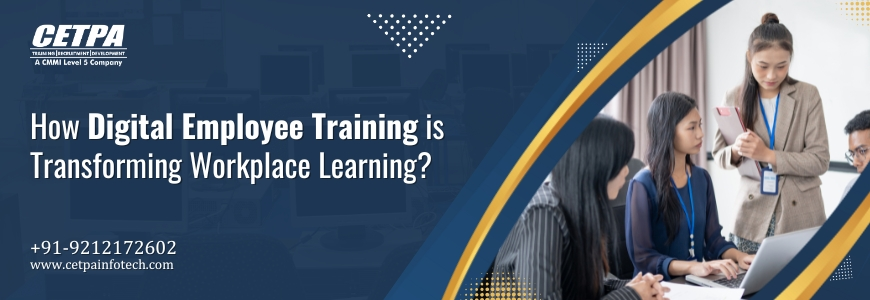
The way organizations train their workforce is changing faster than ever. Traditional workplace training models are no longer enough to keep up with evolving roles, remote teams, and constant skill demands. Digital training for employees has emerged as a practical solution that aligns learning with real work situations. By using employee training online, companies can deliver relevant knowledge at the right time. This shift is redefining learning and development, helping businesses build agile teams while supporting continuous employee skill development.
What Is Digital Employee Training?
Digital employee training refers to the use of technology-driven methods to deliver training through online platforms. Instead of traditional classroom sessions, organizations now rely on employee training online using e-learning platforms, virtual classrooms, and learning management systems. This approach supports continuous learning and development by offering flexible access to training materials anytime, anywhere.
Digital workplace training focuses on skill development of employees through interactive content, videos, assessments, and microlearning modules. It helps businesses implement scalable corporate training solutions while ensuring consistent knowledge sharing across teams and departments.
Flexible Training Designed for How Employees Actually Work
This approach aligns training with real work schedules, responsibilities, and modern workplace expectations.
- Learn anytime, anywhere: Digital workplace training allows employees to access learning materials during breaks, remote work hours, or flexible shifts without disrupting daily tasks.
- Self-paced learning: Employee training online lets individuals move at their own speed, making it easier to understand concepts without pressure.
- Short, focused modules: Microlearning benefits employees by delivering quick lessons that fit naturally into busy workdays.
- Role-based learning paths: Training content can be customized based on job roles, supporting targeted employee skill development.
- Seamless work–learning balance: Online learning for employees integrates smoothly with real projects, encouraging immediate application of new skills.
Why is Personalized Learning the New Standard?
Personalized learning adapts training to individual roles, goals, and learning speeds within modern organizations.
- Role-specific content delivery: Digital training for employees focuses on skills relevant to specific job responsibilities.
- Adaptive learning paths: Employee training online adjusts difficulty and pace based on performance and progress.
- Higher engagement levels: Personalized training keeps learners motivated by addressing their real challenges.
- Better skill retention: Customized learning and development programs improve long-term knowledge application.
- Data-driven improvements: Learning management systems track progress and refine corporate training solutions for continuous improvement.
Short and Focused Employee Training That Delivers Real Results
Short, targeted learning modules help employees build skills faster without disrupting their daily work schedules.
Microlearning Improves Knowledge Retention
Short and focused employee training breaks complex topics into manageable lessons. These bite-sized modules make workplace training easier to absorb and apply immediately. Employees can revisit specific topics whenever needed, improving long-term retention and confidence.
Fits Seamlessly into Busy Workdays
Modern training must align with how employees actually work. Microlearning-based employee training allows learners to complete sessions in minutes, not hours. This flexibility supports continuous learning without affecting productivity.
Faster Skill Development with Clear Outcomes
Focused digital training for employees concentrates on one objective at a time. This clarity helps employees quickly develop practical skills that can be used on the job. It also supports consistent employee skill development across teams.
Supported by Modern Learning Platforms
E-learning platforms and learning management systems track progress, assess performance, and recommend next steps. This ensures corporate training solutions deliver measurable results while supporting learning and development goals efficiently.
Data-Driven Training: Measuring What Actually Matters
Data-driven training helps organizations move beyond assumptions and focus on what truly improves performance. With digital training for employees, learning management systems track participation, completion rates, assessment scores, and skill progress in real time. These insights allow learning and development teams to identify gaps, refine training content, and personalize employee training online based on actual needs.
By analyzing learner behavior and outcomes, companies can measure the real benefits of emloyee digital training, align corporate training solutions with business goals, and ensure employee skill development delivers measurable impact rather than just completed courses.
Digital Training and Employee Growth Go Hand in Hand
Digital training plays a direct role in shaping employee confidence, performance, and long-term career growth.
- Supports continuous skill improvement by enabling employee training that evolves with changing roles and technologies.
- Encourages self-paced learning, allowing employees to balance workplace training with daily responsibilitie
- Builds stronger career pathways through structured learning and development programs aligned with individual goals.
- Improves engagement and motivation by offering relevant digital workplace training instead of one-size-fits-all sessions.
- Strengthens employee retention as consistent digital training for employees shows organizational investment in professional growth.
How Companies Are Winning with Digital Training?
Organizations are seeing measurable improvements in performance and engagement by adopting smarter digital training strategies.
- Improved productivity across teams through employee training online that fits into daily workflows without disrupting operations.
- Faster onboarding processes using structured training delivered via modern e-learning platforms.
- Consistent skill development by standardizing learning and development programs across departments and locations.
- Higher engagement levels with digital training for employees that includes interactive content and practical use cases.
- Better decision-making supported by insights from learning management system analytics and progress tracking.
- Cost-effective training delivery by reducing travel, instructor, and infrastructure expenses while scaling training efforts efficiently.
The Future of Workplace Learning Is Smarter?
The future of workplace learning is clearly moving toward smarter, more adaptive systems that align with how employees actually work. Organizations are shifting from one-size-fits-all programs to digital workplace training that uses data, personalization, and flexibility.
With training supported by advanced e-learning platforms, learning and development become continuous rather than occasional. Tools like blended learning solutions help track progress and refine training outcomes.
As roles evolve faster, digital training for employees ensures consistent skill development, making learning more relevant, efficient, and closely tied to real business goals.
Conclusion
Digital employee training has become a core part of modern workplace success, not just a support function. With flexible online learning for employees, data-driven insights, and blended learning solutions, organizations can create meaningful learning experiences that drive performance.