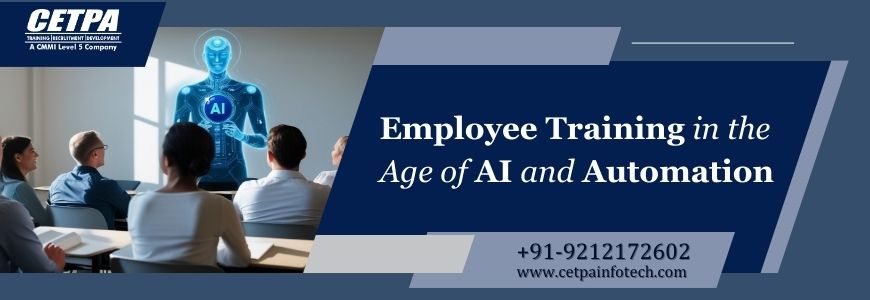
The rapid rise of artificial intelligence and automation is reshaping how organizations operate, compete, and grow. In this changing landscape, employee training has become more critical than ever to help teams adapt to new technologies and evolving job roles. Modern employee training programs now focus on upskilling, reskilling, and continuous learning to support long-term business success. Organizations must rethink how they approach learning to stay relevant and future-ready.
Key Skills Employees Need in the Age of AI
Digital Literacy and AI Awareness
In the age of AI, employees must develop strong digital literacy to understand how intelligent systems work alongside humans. Through workplace training initiatives, professionals learn to interpret AI-driven insights, use automation tools, and adapt to new technologies. This foundation helps organizations align employee training and development with evolving digital workflows.
Data Interpretation and Analytical Thinking
AI generates large volumes of data, but human judgment is still essential. Corporate training for employees should focus on analytical thinking, enabling teams to evaluate outputs, spot patterns, and make informed decisions. Well-designed employee training programs strengthen problem-solving skills that machines cannot fully replace.
Adaptability and Continuous Learning
Rapid technological change demands adaptability. Training for company employees must encourage continuous upskilling. Employees who embrace learning stay relevant, making corporate training a long-term investment rather than a one-time activity.
Collaboration and Communication Skills
As AI handles routine tasks, human collaboration becomes more valuable. Effective employee training emphasizes communication, teamwork, and cross-functional coordination to maximize productivity in AI-driven environments.
How AI Is Transforming Employee Training Programs?
Artificial intelligence is reshaping the way organizations design, deliver, and evaluate learning initiatives. Modern employee training is no longer limited to one-size-fits-all programs. With AI-powered tools, companies can create smarter, more flexible learning environments that align with both employee needs and business goals. Below are the key ways AI is transforming programs across industries.
- AI personalizes employee training programs by adapting content to individual learning styles, skill gaps, and performance levels.
- Smart analytics help organizations improve employee training and development by tracking progress and predicting future training needs.
- Automation enables scalable workplace training, allowing employees to learn anytime through AI-powered platforms and virtual trainers.
- Corporate training for employees becomes more efficient with chatbots, simulations, and adaptive assessments that offer real-time feedback.
- AI-driven insights help companies design targeted training for company employees, reducing costs while improving learning outcomes.
Benefits of Employee Training in an AI-Driven Workplace
Investing in employee training is crucial as organizations adopt AI and automation technologies. Well-structured training programs not only enhance skills but also boost efficiency, engagement, and adaptability in a fast-evolving workplace. Here are the key benefits:
- Enhances employee skills to work effectively with AI tools and automated systems.
- Supports continuous employee training and development, keeping teams updated on emerging technologies.
- Improves productivity through well-designed corporate training for employees.
- Fosters adaptability, innovation, and confidence among staff through targeted training for company employees.
- Aligns employee growth with organizational goals via organizational training initiatives.
- Reduces errors and increases operational efficiency in workplace training scenarios.
Challenges in Employee Training and How to Overcome Them
Implementing effective employee training programs in the age of AI and automation comes with unique challenges. Organizations must recognize and address these obstacles to ensure successful learning outcomes.
Challenges:
- Rapid Technology Changes: AI tools evolve quickly, making it difficult for employees to stay updated.
- Resistance to Change: Some employees may hesitate to adopt new learning methods or technologies.
- Time Constraints: Balancing workplace training with regular tasks can be challenging.
- Limited Resources: Smaller organizations may struggle with budgets for corporate training for employees.
- Varied Learning Needs: Employees have diverse skill levels and learning styles.
Solutions:
- Offer employee training and development programs with modular, flexible content.
- Incorporate interactive and AI-driven learning platforms to engage staff.
- Schedule short and focused training for company employees that fit into work schedules.
- Leverage organizational training to align learning with company objectives and track progress.
Best Practices for Implementing Employee Training in the AI Era
To maximize the effectiveness of employee training programs in an AI-driven environment, organizations should adopt strategic approaches that align learning with technological advancements.
- Assess skill gaps: Conduct assessments to identify areas where employees need upskilling or reskilling.
- Leverage AI-powered learning tools: Use intelligent platforms that personalize learning paths for each employee.
- Incorporate blended learning: Combine online modules with corporate training for employees and hands-on sessions for practical experience.
- Focus on continuous learning: Encourage ongoing employee training and development rather than one-time workshops.
- Engage employees actively: Use gamification, interactive content, and real-world simulations to enhance learning retention.
- Monitor and measure outcomes: Track progress through assessments and performance metrics to refine workplace training strategies.
How Organizations Can Prepare for the AI-Driven Future?
To succeed in an AI-driven workplace, organizations must update employee training programs to bridge skill gaps and prepare staff for automation. Focused training for employees in AI tools, data literacy, and problem-solving builds a capable workforce.
Promoting continuous learning ensures employees remain adaptable. Integrating AI-powered platforms in training provides practical, real-world experience safely. Aligning organizational training with business goals helps minimize disruption, improve efficiency, and maintain a competitive edge in a rapidly evolving AI-driven business environment.
Conclusion
As AI continues to transform the workplace, organizations that prioritize organizational training and align learning with business goals are better equipped to manage change. Effective corporate training builds confidence, improves productivity, and prepares employees for future challenges. By embracing continuous learning, companies can ensure sustainable growth and resilience in an AI-driven world.